
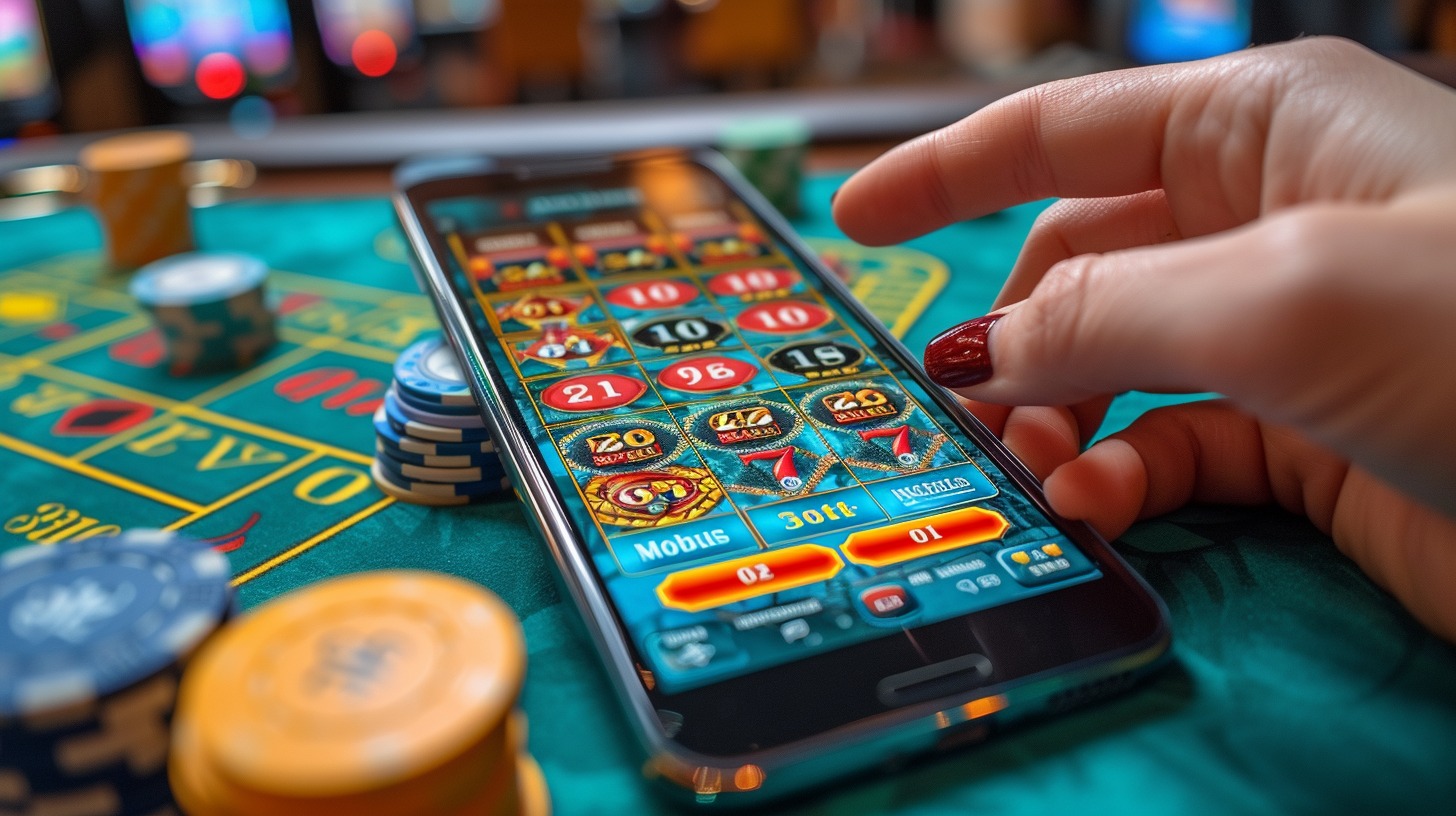
Grasping mobile casino applications stems from identifying a basic change in how digital gaming is presented incaspinca.com. A current casino app is not just a scaled-down website; it is a purpose-built piece of software engineered to interact seamlessly with a smartphone or tablet operating system. These applications deliver native connection to slots, table games, and live dealer experiences, leveraging device hardware like graphics processors and touchscreens to produce a smoother, more dynamic session than a mobile browser can commonly offer. The idea can seem technical, but the truth for the user is simplicity itself. Once a player retrieves and configures the proper file from a trusted source like the official Incaspin Casino mobile page, the app closes the gap between complex remote gaming servers and a portable touch interface, converting a waiting room or a quiet evening at home into a energetic, feature-rich entertainment hub that rests within a pocket and answers instantly to every command.
Understanding the Direction of Portable Casino Technology
The path of mobile casino apps leads toward greater hardware integration and a fading of the line between the digital table and physical reality. High refresh rate screens, now typical even on mid-range gadgets, permit a roulette ball to rotate with zero blurring, an almost unnoticeable enhancement that significantly affects the subjective feeling of fairness. Developers are leveraging haptic feedback motors to generate subtle tremors timed with slot reel landings, activating a tactile sense that websites cannot match. The most notable horizon transformation involves augmented reality. By utilizing the LiDAR scanner on modern slates or the depth camera on phones, a future edition of the Incaspin Casino mobile app could display a three-dimensional poker table directly onto a living room coffee table, tracking head movement to preserve a static virtual cloth. Similarly, artificial intelligence units embedded in CPUs will allow real-time language conversion in chat-based live dealer tables, removing down linguistic barriers instantly. These advances keep to separate sharply from browser-based gaming, establishing dedicated platforms as the primary medium for anyone committed about an continuous, perceptually rich interactive gambling session.
System Compatibility and System Prerequisites
How iOS and Android Manage Casino Software Differently
The mobile gaming landscape is separated mainly between two systems, each of which treat casino software with distinct philosophies. Apple follows a controlled approach, yet real-money gambling apps are commonly restricted from the official App Store depending on the user’s registered region. To navigate this, providers like Incaspin Casino offer a dedicated iOS configuration profile or a web-app solution that adds an icon straight to the home screen, acting almost identically to a standard binary. Android, by contrast, uses an open-source architecture that enables the hand installation of APK files. This process, called “sideloading,” requires the user to briefly modify their security settings to enable installation from unknown sources, namely the official operator website. This is a typical technical step, not a security risk, assuming the source is confirmed. These different methods mean an app made for iPhone will not ever run on Android and vice versa, rendering it critical for beginners to choose the right download link exactly matching their device model to guarantee the code works correctly with the hardware drivers.
Basic Specifications for Fluid Live Dealer Streaming
While standard slot games run comfortably on older-generation hardware, live dealer lobbies demand a higher performance ceiling that users should confirm before downloading. These apps broadcast real-time video from real studio tables using sophisticated compression codecs, which depend on a combination of a steady Wi-Fi connection and a CPU capable enough to render high-definition frames without latency. If the processor struggles, the outcome is choppy video or audio desynchronization, which spoils the engaging real-time betting rhythm. For an acceptable experience on the Incaspin Casino platform, Android devices usually need at least 4GB of RAM and an octa-core processor clocked above 1.8 GHz, matched with Android 10 or above. On iOS, devices less recent than the iPhone 8 may still run the software but commonly overheat during prolonged live streams due to aging battery management systems. The app itself occupies minimal storage space, but the temporary cache generated by high-definition video streams requires at least 3GB of free space to stop slow menu navigation.
The Practical Advantages of Dedicated Casino Applications
Choosing a dedicated application rather than a regular mobile website provides several distinct performance advantages based on device architecture. Because an app stores core graphical assets straight on the device memory, loading times for game lobbies and slot reels fall dramatically compared to a browser, which must constantly re-download these heavy files. Push notification technology, which is unique to installed apps, enables operators like Incaspin Casino to inform players to limited-time promotions or immediately confirm when a withdrawal has been processed, without the user needing to keep an email tab open. Beyond speed, native apps often support biometric login. This means a player can verify using a stored fingerprint or facial recognition scan as opposed to manually typing a complex password every session, a secure convenience that browsers seldom implement with the same reliability. The framing of the experience also changes; an app fills the full screen without an address bar or tab interface, creating a distraction-free environment where visual focus remains entirely on the game interface.
Connection Troubleshooting and Connection Stability
When a mobile casino app stutters or drops during a live hand, the root cause often originates in latency spikes rather than raw download speed, a distinction crucial for effective troubleshooting. Most apps, including the client from Incaspin Casino, operate on a WebSocket protocol for real-time events, sustaining a persistent open channel to the game server. If a user plays on a congested 2.4 GHz Wi-Fi band, microwave interference or neighboring routers can sever this delicate socket approximately every sixty seconds. Switching the device to a 5 GHz network, or even a strong 4G LTE cellular connection, often forms a more durable handshake. On the software side, power-saving modes are common culprits of black screens. Aggressive battery optimization on recent Android versions can misidentify the game engine as a background process mid-spin and stop its CPU thread. The fix is deep-linking into the app info settings and explicitly disabling battery restrictions for the casino software. Clearing the temporary data cache—not user data which deletes logins—also resolves version conflicts where an old slot script competes against a recently patched lobby shell, returning fluid navigation instantly.
User Interface and User Account Control
Design Logic Underlying the Mobile Banking Module

The banking interface inside a casino app follows a distinctly different design heuristic than a typical banking app, focusing on smooth transitions between game wallets and tables over strict ledger design. Touch targets for deposit buttons are intentionally oversized and spaced apart, often mapped to match the typical width of a thumb, minimizing the mistaken activation of a payment when navigating through an options list. The cashier module typically supports digital wallets alongside traditional cards, employing a tokenization process where the app never keeps raw banking numbers. Instead, it maintains a cryptographic marker that validates a transaction via a third-party gateway. This isolation of sensitive data means even if a device were hacked, the bare card number would not reside within the app’s local storage to be accessed. When a player requests a withdrawal, the reverse screen intelligently dims inactive methods. If a deposit was made via a method that does not support refunds, the app UI automatically hides that path to stop a failed transaction error, guiding the user toward viable e-wallet alternatives without technical jargon.
Customizing Game Lobbies for Rapid Navigation
A seasoned user rarely scrolls through an entire catalog to find a preferred title; they utilize the lobby’s filtering architecture via specific technical tags. Casino apps load in advance a metadata layer distinct from the heavy graphical thumbnails, enabling instant sorting by an operator’s engine or a numerical volatility index. If a player favors the mechanized feel of a specific studio known for high frame-rate animations, they can refine the lobby solely to that developer’s API feed. More significantly, bonus contribution weightings, often hidden in generic menus, are plainly surfaced in a well-built app like the one offered by Incaspin Casino. Titles where a wager contributes 100 percent toward clearing a bonus requirement are graphically tagged in a different way than restricted jackpot slots, where only a fraction counts. This avoids the common frustration of playing through a wagering requirement at a quarter of the expected speed. Beginners should also activate the “favorites” star, which writes a tiny session token to the device, syncing that personalized list across sessions without requiring a server query every time the app loads.
Essential App Permissions and Data Safety
The opening launch of a new casino application introduces a series of permission requests that can worry the uninformed, but each dialog serves a technical necessity that maintains the gameplay umbrella. Location services are a perfect example. Casual slot players hardly ever need to share their exact GPS coordinates, but a regulated app in certain jurisdictions utilizes IP geolocation or satellite triangulation to verify the player is physically within a permitted territory before a real-money wager processes. This is a legal compliance measure, not a marketing tracker. Camera and microphone access keep dormant unless the user actively enters a live poker or blackjack room offering two-way interactive dealer feeds. Furthermore, storage permission allows the app to cache game logic scripts locally, building a protective buffer against network drops. Files never scan the personal photo gallery; they are sandboxed in a hidden directory. Incaspin Casino guarantees these data packets travel via TLS 1.3 encryption tunnels, and the app footprint cannot read cookies or saved logins from other non-gaming software, meaning financial transactions remain entirely isolated from social media or email client vulnerabilities.
Understanding the Setup and Authentication Workflow
APK Manual Setup on Android Devices
Loading an APK beyond the Google Play Store triggers a protective measure that new users must grasp to prevent confusion. After tapping the dedicated Android button on the Incaspin Casino mobile page, the original installation file saves into the device’s “Downloads” directory. As the user launches this file, the operating system will stop the installation via a pop-up, since it is configured to disallow software from unrecognized sources. The proper course is to select “Settings” within that pop-up and toggle the permission particularly for the web browser that initiated the download. This is not a system-wide root-level change to the phone; it momentarily allows that single browser to finish the action. When installed, experts advise right away navigating back and removing that particular permission to reinstate the security baseline. The app icon then emerges in the library like any other tool, and upon launch, it prompts for microphone or camera access only if the user aims to join live dealer tables, never arbitrarily.
Setting Up the Home Screen for iOS Users
Apple’s restrictions create a different path that results in a quasi-app operating through Safari’s rendering engine but separated into its own sandboxed container. The installation flow for the Incaspin Casino app on iPhone starts a directed procedure where the user taps the share icon in the Safari toolbar and chooses “Add to Home Screen.” This captures the particular URL parameters to a self-contained shortcut, stripping away the search bar and tab controls. Because run-time web technologies drive this experience, it auto-updates without needing a manual software patch, which is a clear advantage over traditional installs. The critical step many beginners overlook is exiting Safari completely and launching the newly created icon to trigger the opt-in prompt for push notifications. If the Safari browser remains active in memory, the iOS notification bridge occasionally fails to bind to the device token, causing the user oblivious of time-sensitive bonuses. This home-screen icon ensures the digital footprint is small, often staying under 30 megabytes.